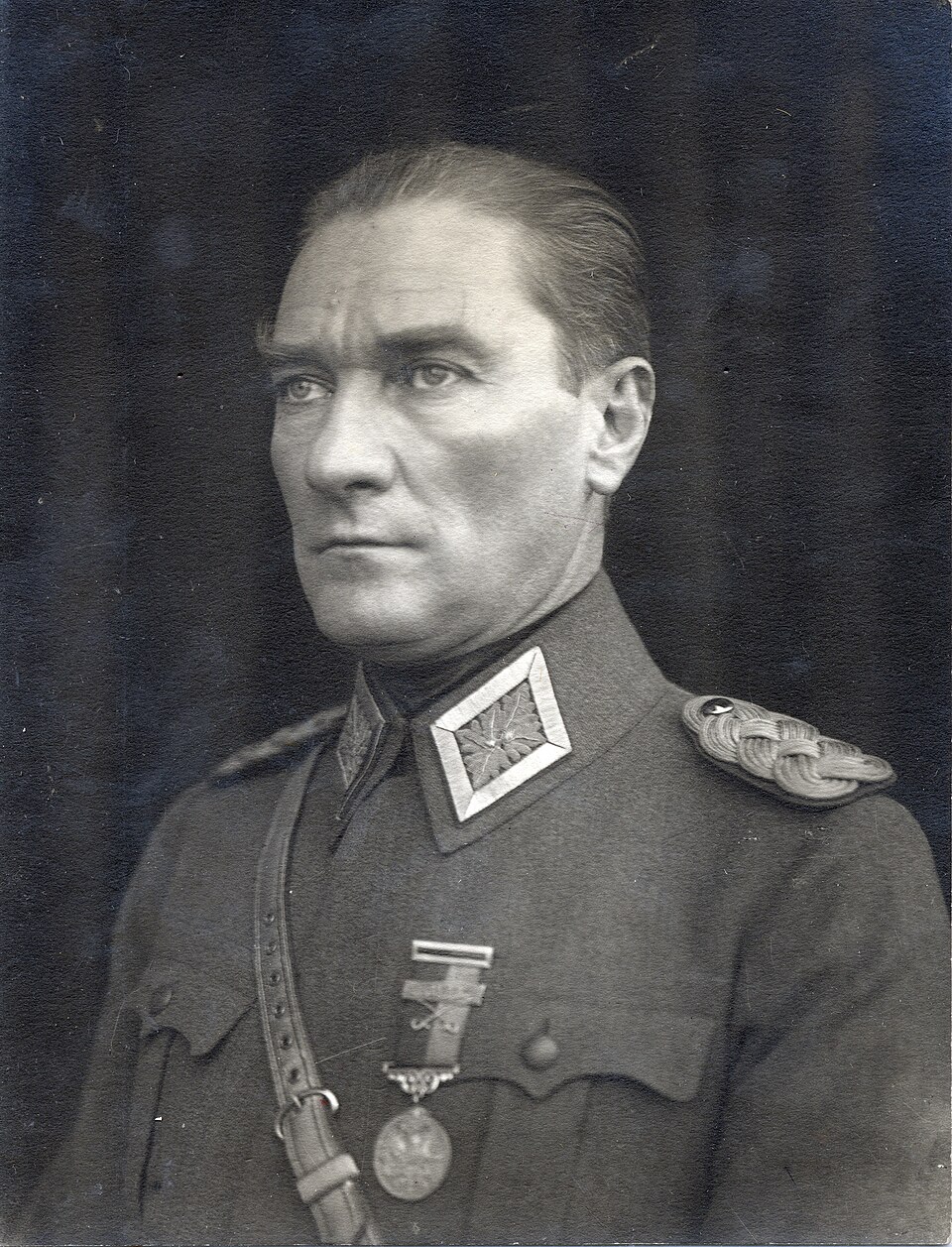
Atatürk's Enduring Vision for Turkish Women's Rights: A Legacy of Empowerment
International Women's Day, celebrated annually on March 8th, serves as a poignant reminder of women's invaluable contributions to society and their ongoing struggle for equality. In this global context, the profound insights and transformative policies of Mustafa Kemal Atatürk, the founder of the Republic of Turkey, resonate with particular force. His unwavering belief in gender equality and his revolutionary efforts to uplift women from their traditional confines into active, enlightened participants in all facets of life remain a cornerstone of modern Turkish identity. Indeed, the collection of
Atatürkün Kadınlarla Ilgili Sözleri (Atatürk's words about women) offers a compelling blueprint for national development through empowerment.
Atatürk’s vision transcended mere rhetoric; it was a fundamental philosophy that underpinned the very foundation of the new Turkish Republic. He recognized that for a nation to truly prosper and stand strong on the world stage, its women could not remain marginalized. They were not just the bedrock of families but essential co-architects of national destiny. His words and deeds laid the groundwork for a society where women were granted rights and opportunities unprecedented in many parts of the world at that time.
The Dawn of Equality: Atatürk's Revolutionary Stance on Women's Rights
Atatürk's perspective on women was nothing short of revolutionary, especially considering the societal norms of the early 20th century, both within the Ottoman Empire and across much of the globe. He challenged deeply ingrained patriarchal traditions, advocating for women's full integration into public life. His famous assertion, "
Dünya yüzünde gördüğümüz her şey kadının eseridir," (Everything we see in the world is the product of women's work) succinctly captures his appreciation for their fundamental role in creation, culture, and progress. This wasn't merely a poetic statement; it was a declaration of women's inherent worth and indispensable contribution to civilization itself.
He passionately argued against the historical subjugation of women, proclaiming, "
Ey kahraman Türk kadını, sen yerlerde sürünmeye değil omuzlar üzerinde göklerde yükselmeye layıksın," (Oh heroic Turkish woman, you are not fit to crawl on the ground, but to rise to the heavens on shoulders). This powerful image conveyed a complete reversal of fortune, elevating women from subservience to a position of honor, respect, and leadership. Atatürk understood that a nation's strength was intrinsically linked to the status of its women. His vision demanded that women be seen as equals, not as lesser beings, and certainly not as obstacles to progress.
Education, Science, and Virtue: Pillars of a Modern Woman
Central to Atatürk's transformative agenda was the belief that education was the most potent tool for women's empowerment and, by extension, national advancement. He famously warned, "
Kadınlarını okutmayan milletler yıkılmaya mahkûmdur," (Nations that do not educate their women are doomed to collapse). This stark statement underscored his conviction that an uneducated female populace represented an existential threat to a nation's future. For Atatürk, education was not a luxury but a fundamental necessity for both men and women.
He envisioned a society where knowledge was universally accessible, stating, "
Bizim toplumumuz için ilim ve fen lazım ise, bunları aynı derecede hem erkek hem de kadınlarımızın iktisap etmesi lazımdır," (If science and knowledge are necessary for our society, then both our men and women must acquire them to the same degree). This principle guided the establishment of co-educational institutions and the opening of universities and various professions to women. He believed that an enlightened mother would raise enlightened citizens, capable of contributing actively to a modern republic.
Beyond formal education, Atatürk emphasized the importance of intellectual and moral development. He stated, "
Kadınlarımız için asıl mücadele alanı, asıl zafer kazanılması gereken alan, biçim ve kılıkta başarıdan çok; ışıkla, bilgi ve kültürle, gerçek faziletle süslenip donanmaktır," (The true battleground for our women, the field where real victory must be won, is not in success in form and appearance, but in adorning and equipping themselves with light, knowledge, culture, and true virtue). This quote beautifully encapsulates his holistic vision for women: one that prioritized inner substance – intellect, wisdom, and character – over superficial attributes. It was a call to develop the mind and soul, recognizing that true empowerment came from within. For further insights into this aspect, consider reading
Unveiling Atatürk's Wisdom on Women, Education, and Nation.
Women as Co-Architects of the Nation: Societal and Political Integration
Atatürk's vision extended far beyond education, advocating for women's full participation in all spheres of public life. He asserted, "
Kadınlar içtimai hayatta erkeklerle birlikte yürüyerek birbirinin yardımcısı ve destekçisi olacaklardır," (Women will walk alongside men in social life, becoming each other's helpers and supporters). This statement championed a partnership model for society, where men and women worked collaboratively towards common national goals. He recognized that progress was a shared endeavor, not an exclusively male domain.
A testament to this belief was the rapid implementation of legal reforms that granted Turkish women unprecedented rights. In 1926, the Turkish Civil Code replaced religious law, giving women equal rights in marriage, divorce, and property inheritance. Crucially, Turkish women gained municipal voting rights in 1930 and full suffrage (the right to vote and be elected to parliament) in 1934 – significantly earlier than women in many prominent Western democracies like France, Italy, and Switzerland. This pioneering move reflected Atatürk's conviction that "
Milletimiz güçlü bir millet olmaya azmetmiştir. Bunun gereklerinden biri de kadınlarımızın her konuda yükselmelerini sağlamasıdır," (Our nation is determined to be a strong nation. One of its requirements is to ensure the advancement of our women in every field).
Moreover, Atatürk never forgot the immense sacrifices made by Turkish women during the War of Independence. He often acknowledged their resilience and heroism, declaring, "
Dünyada hiçbir milletin kadını, milletini kurtuluşa ve zafere götürmekte, Anadolu kadınından daha fazla çalıştım diyemez," (No woman in any nation in the world can say that she worked harder than the Anatolian woman to lead her nation to salvation and victory). This historical recognition formed the moral basis for their new rights, framing them not as a gift, but as a rightful acknowledgment of their enduring contribution. To delve deeper into these empowering quotes, explore
Atatürk on Women: Empowering Quotes for Equality & Society.
The Enduring Legacy: Atatürk's Vision in Contemporary Turkey
The principles espoused in
Atatürkün Kadınlarla Ilgili Sözleri continue to be a source of inspiration and a benchmark for gender equality in Turkey and beyond. His vision laid the foundation for Turkish women to pursue careers in medicine, law, engineering, education, and politics, breaking barriers that persisted for decades in many other countries. Today, Turkish women hold significant positions across all sectors, demonstrating the long-term impact of his reforms.
While challenges to full gender equality persist globally, Atatürk's legacy serves as a powerful reminder of what is possible when a leader champions human rights and understands the symbiotic relationship between women's empowerment and national progress. His words are not merely historical artifacts but living directives, urging continuous effort towards a society where every individual, regardless of gender, has the opportunity to thrive and contribute their fullest potential. His foresight in integrating women's rights into the very fabric of national development offers valuable lessons for any society striving for true modernity and strength.
In essence, Atatürk's vision for Turkish women was holistic: rooted in education, expressed through legal equality, and actualized through active participation in all aspects of national life. His belief in women's capabilities was unwavering, and his reforms transformed a society, creating a powerful blueprint for empowerment that continues to inspire.